Home / Blog / Starting an Online Business? Here’s What You Need to Know About GST
Starting an Online & Ecommerce Business

Starting an Online Business? Here’s What You Need to Know About GST

Starting a business online has never been easier. You can sell through your own website, through social media, or on marketplaces like Amazon, Flipkart, Meesho or Myntra, and reach customers all over India without renting a single shop.

But while most new sellers spend all their time choosing products, building their brand and planning how to market, one thing often gets ignored: GST. “Do I need to register for GST?”, “Can I sell on Amazon without GST?”, “What is TCS?”, “Can I claim Input Tax Credit?” these are the questions almost every first-time online seller asks. Getting clear on them before your first sale can save you from notices, interest, penalties and cash flow trouble down the line.

First, Decide How You Want to Sell

Before you think about GST, decide how you’re going to sell:

  • Your own website – you control the pricing, the branding and the whole customer experience.
  • Marketplaces like Amazon, Flipkart, Meesho or Myntra – you get access to far more customers, but also more GST compliance to handle.
  • Social media like Instagram, Facebook and WhatsApp Business – you take orders directly from customers.

Each of these has different GST implications, so it helps to know your selling model first, and then work out your tax obligations.

GST For Online or Ecommerce Sellers you need to know everything

Do You Actually Need GST Registration?

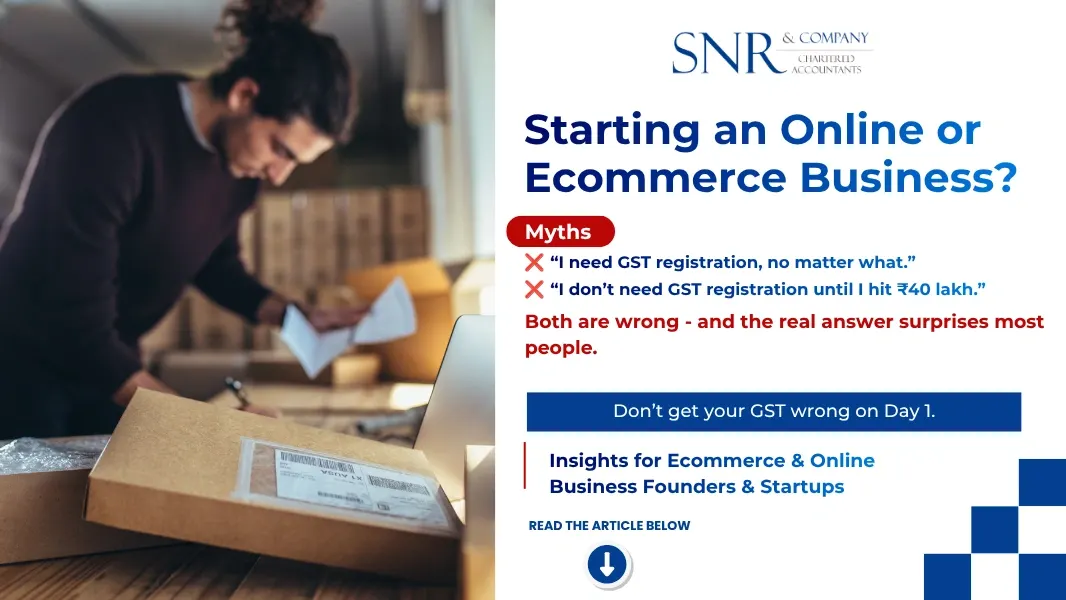
A common myth is that every online seller must register for GST before they can start selling. That’s not quite true, but the real answer depends on a rule that is generally missed.

Under Section 24(ix) of the CGST Act, if you sell goods or services through a marketplace (E-commerce Operator) that is required to collect Tax Collected at Source (TCS) under Section 52, you must register for GST – no matter how small your turnover is. This has been the rule for years and is still the default.

Since 1 October 2023, there’s one real exception: if you sell only within your own state (buyer and seller both in the same state, nothing shipped across state lines) through a marketplace, you can operate without a full GSTIN, as long as your turnover stays under the usual limits. Instead of a GSTIN, you get a PAN based Enrolment Number through the GST portal.

IN SIMPLE TERMS

This exception really only helps small, local sellers who never ship out of state. If you plan to sell across India from day one, like most marketplace sellers do, registration is practically compulsory right from your first sale.

Even if registration isn’t compulsory for you, it’s often worth doing anyway. A GSTIN makes your business look more credible, most marketplaces ask for one regardless of any exemption, it lets you claim Input Tax Credit, and it saves you a last-minute scramble if your turnover crosses the limit later. Of course, registering also means more compliance work – returns, records and paying tax on time – so it’s a genuine trade-off, not something to do without thinking it through.

Get the Basics Right Before Your First Sale

A few decisions matter just as much as registration. The business structure you pick – sole proprietorship, partnership, LLP or private limited company – affects your GST registration, income tax, banking and even your ability to raise funds later. Having a separate bank account for your business isn’t compulsory in every case, but it keeps your books clean and makes GST reconciliation much easier. And before you list a single product, make sure you have the correct HSN code and GST rate getting this wrong is one of the most common reasons sellers end up with tax disputes, short payments, interest and penalties.

Own Website or a Marketplace?

Many first-time entrepreneurs aren’t sure whether to build their own website or sell on an established marketplace.
Particulars Own Website Marketplace
Getting customers
Through your own marketing
Through the marketplace
Brand control
Full control
Limited
Marketplace commission
None
Applicable
TCS under GST
Not applicable
Applicable where prescribed
Compliance
Comparatively simpler
Extra reconciliation needed

Your own website gives you complete control over your brand and how you deal with customers, but you’ll need to keep investing in marketing to get people there. Marketplaces bring you instant access to millions of customers along with ready-made logistics and payments, but come with extra compliance – mainly matching your settlement reports and TCS credits. Many businesses eventually do both.

Understanding TCS

If you sell through a marketplace, you need to understand TCS, or Tax Collected at Source. The marketplace deducts TCS usually 0.5% of the taxable value of your sales and deposits it with the government on your behalf. This amount shows up in your Electronic Cash Ledger, and you can use it to pay your GST. TCS isn’t an extra tax on top of what you already owe; it’s simply collected in advance. The real risk is forgetting to reconcile it.

Claiming Input Tax Credit

Registering for GST isn’t only about compliance it’s also how you get back the tax you’ve already paid on things you buy for your business. Subject to the usual GST conditions, you can generally claim ITC on packaging material, advertising, professional fees, office equipment, business software, warehouse rent and courier services. But none of this happens automatically you need proper tax invoices and you need to file your returns on time for the credit to actually be usable.

Invoicing, Returns and Payment

Every registered seller must issue proper GST invoices with all the required details, and follow e-way bill rules whenever goods are transported and the conditions apply. Returns need to be filed on time – monthly, or quarterly if you’re on the QRMP Scheme and GST needs to be paid on time too, or you’ll end up paying interest, late fees, and possibly dealing with a notice from the department.

Reconciliation: The Step Most Sellers Skip

Every so often, sit down and match your sales as recorded in your books, your marketplace settlement reports, your website sales, your bank receipts, GSTR-1, GSTR-3B, GSTR-2B, and the TCS shown on the portal. This one habit is the best way to catch mistakes early, before they turn into a notice.

Common Mistakes Online Sellers Make
  • Starting to sell without checking whether GST registration actually applies to their channel and where they ship.
  • Using the wrong GST rate or HSN code.
  • Letting TCS credit sit unused on the portal.
  • Claiming ITC they aren’t actually eligible for.
  • Filing returns or paying tax late.
  • Not matching marketplace reports against their own books.
  • Poor invoicing and record-keeping.
A Quick GST Checklist Before You Launch
  1. ✔  Checked whether registration is compulsory for your channel and the states you ship to.
  2. ✔  Chosen a suitable business structure.
  3. ✔  Opened a dedicated business bank account.
  4. ✔  Found the correct HSN code and GST rate.
  5. ✔  Registered with your chosen marketplace, if applicable.
  6. ✔  Set up GST-compliant invoicing.
  7. ✔  Put a system in place for filing returns and paying tax on time.
  8. ✔  Set up a monthly reconciliation routine.
In Conclusion

Starting an online business is no longer something only big companies can do anyone can build a real business from home today. But how well you handle compliance matters just as much as picking the right product. Knowing whether you actually need to register for your channel and states, choosing the right GST rate, claiming the ITC you’re entitled to, understanding TCS, and reconciling your numbers regularly these are what separate a business built to last from one that’s headed for a notice. A little planning before your first sale saves you a lot of time, money and stress later, so you can focus on what really matters – growing your business.

Schedule a Consultation

Fill out the form below, and we will be in touch shortly.